
01
Root Canal Treatment and Infection Management
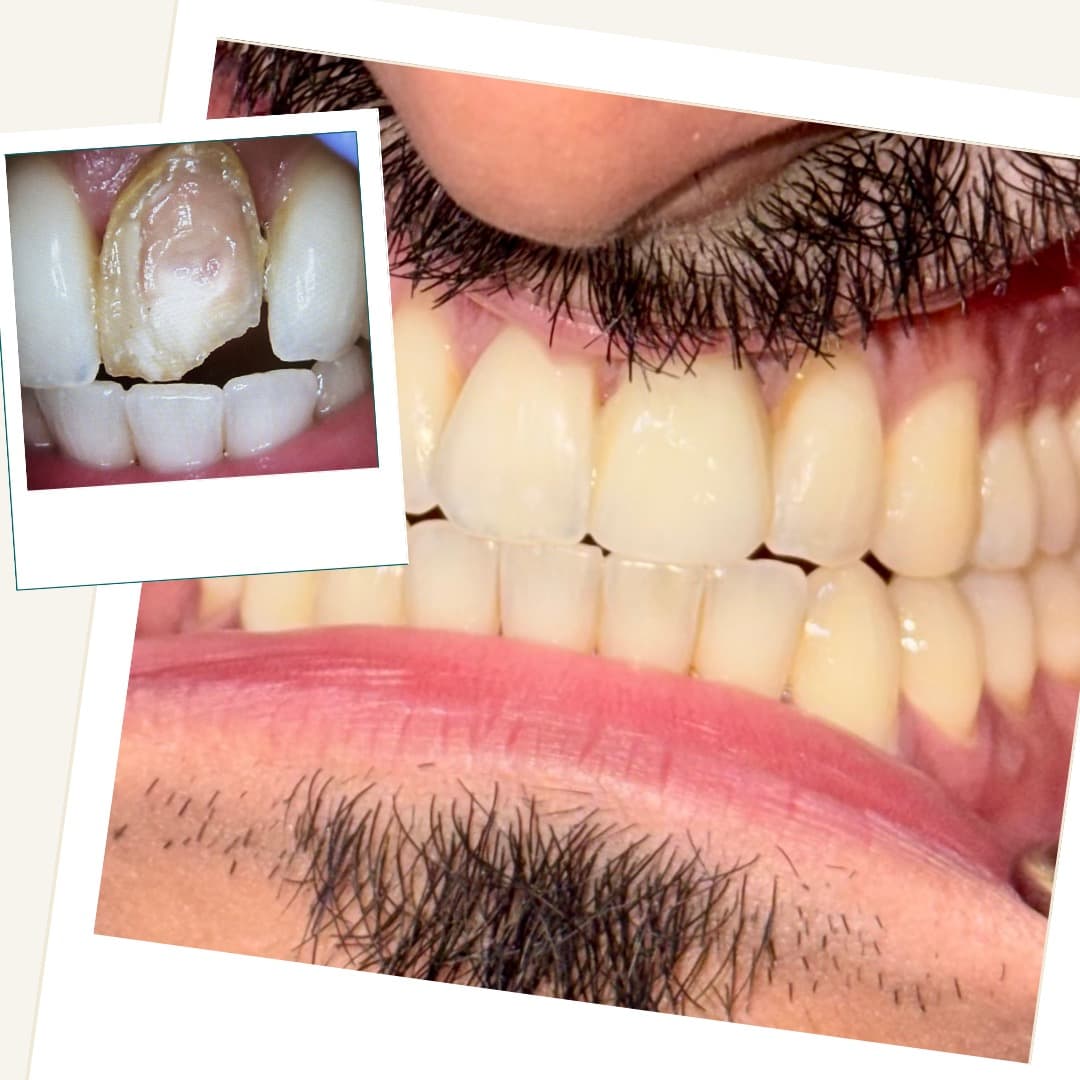
The tooth showed marked internal discolouration and a sinus tract in the adjacent gum. Radiographs and vitality testing indicated that the tooth was non-vital, with chronic apical periodontitis.
Root canal treatment was completed over two appointments using rubber-dam isolation, magnification and contemporary endodontic techniques. The canal system was shaped, disinfected and filled before restorative treatment continued.
02
Internal Whitening with the Walking-Bleach Technique
Because the discolouration originated within the non-vital tooth, internal whitening was selected rather than relying on external whitening alone.
Over several visits, whitening material was placed within the prepared pulp chamber and sealed temporarily. The shade was reviewed between visits until an agreed improvement had been reached.
03
Fibre Post and Core Reconstruction
After the shade had stabilised, the remaining tooth structure was reassessed. A tooth-coloured fibre post and composite core were placed where additional retention was required for the final restoration.
The metal-free foundation avoided introducing a dark post beneath the planned translucent ceramic restoration.
04
Conservative Ceramic Veneer
An individually made bonded ceramic veneer was fitted to restore the visible surface of the tooth. Before bonding, its fit, margins, shade, contour and bite contacts were assessed clinically and reviewed with the patient.
05
Maintenance and Continuing Review
The maintenance plan included daily cleaning around the veneer margins, regular dental and hygiene reviews, and use of a custom night guard if indicated by the patient's bite and grinding history.
The patient was advised to avoid biting hard objects directly with the restored tooth. A treatment report and clinical records were prepared for the referring dentist to support continuing care.